
Choosing your wine
Sancerre Pinot Noir: Aromas, Style, and Characteristics


Sancerre Pinot Noir: Aromas, Style, and Characteristics
Sancerre is not just a land of Sauvignon Blanc. For generations, we have also cultivated Pinot Noir on the same hillsides — a red grape with a pale color, supple tannins, and a freshness that bears no resemblance to the powerful reds of the south of France. It is a distinct, often overlooked style that this guide invites you to discover.
This Pinot Noir is not a lesser version of Burgundy. It is an expression unique to Sancerre, shaped by a cooler climate and similar soils: calcareous clays, Kimmeridgian marl, and flint. Here's how to recognize, understand, and choose it.
Sancerre Pinot Noir shares the DNA of the grape variety, but in a fresher, more vertical version than its Burgundian cousins:
This style is due to Sancerre's semi-continental climate, which is cooler than in southern Burgundy, preserving the freshness of the grapes and delaying overripening.
It's no coincidence that more and more Burgundy and Beaujolais enthusiasts are now turning to red Sancerre: it offers an alternative that is both more affordable and more immediately expressive, without ever compromising on the elegance characteristic of the grape variety.
Cherry, wild strawberry, raspberry, redcurrant: the fruity register dominates, with a crispness reminiscent of Sauvignon Blanc's freshness.
→ Sauvignon Blanc: taste, aromas and style
Rose and peony often appear on the nose, a discreet but characteristic signature of great cool-climate Pinot Noir.
With a few years of aging, undergrowth, sweet spices, and a slight leathery note enrich the profile without ever weighing it down.
As with Sauvignon Blanc, the soil changes everything:
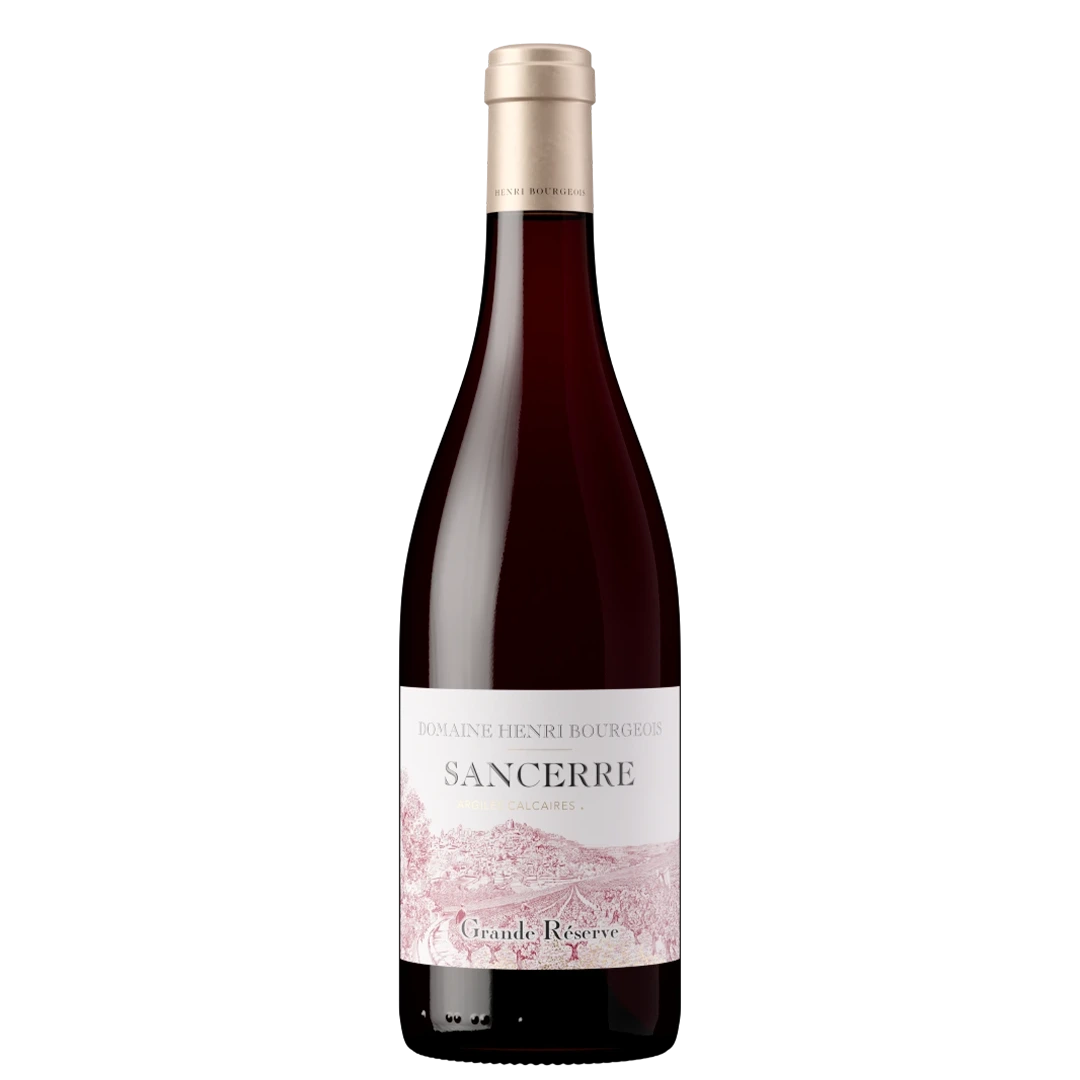
On chalky clays: Sancerre red "Grande Réserve", fruity, round, immediately accessible
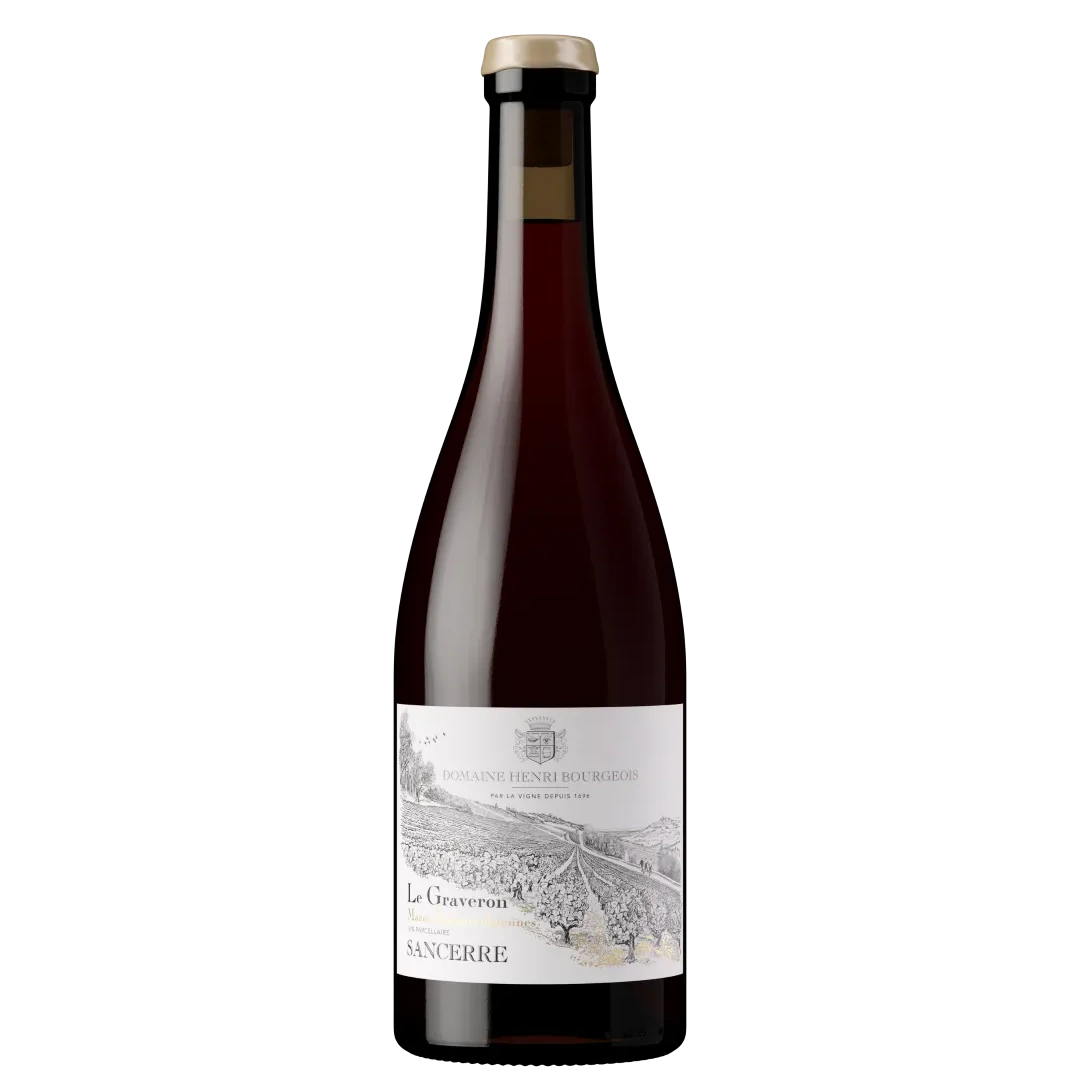
On Kimmeridgian marl ("Terres Blanches"): "Le Graveron", the most structured single-parcel cuvée, in a style that could be described as Burgundian
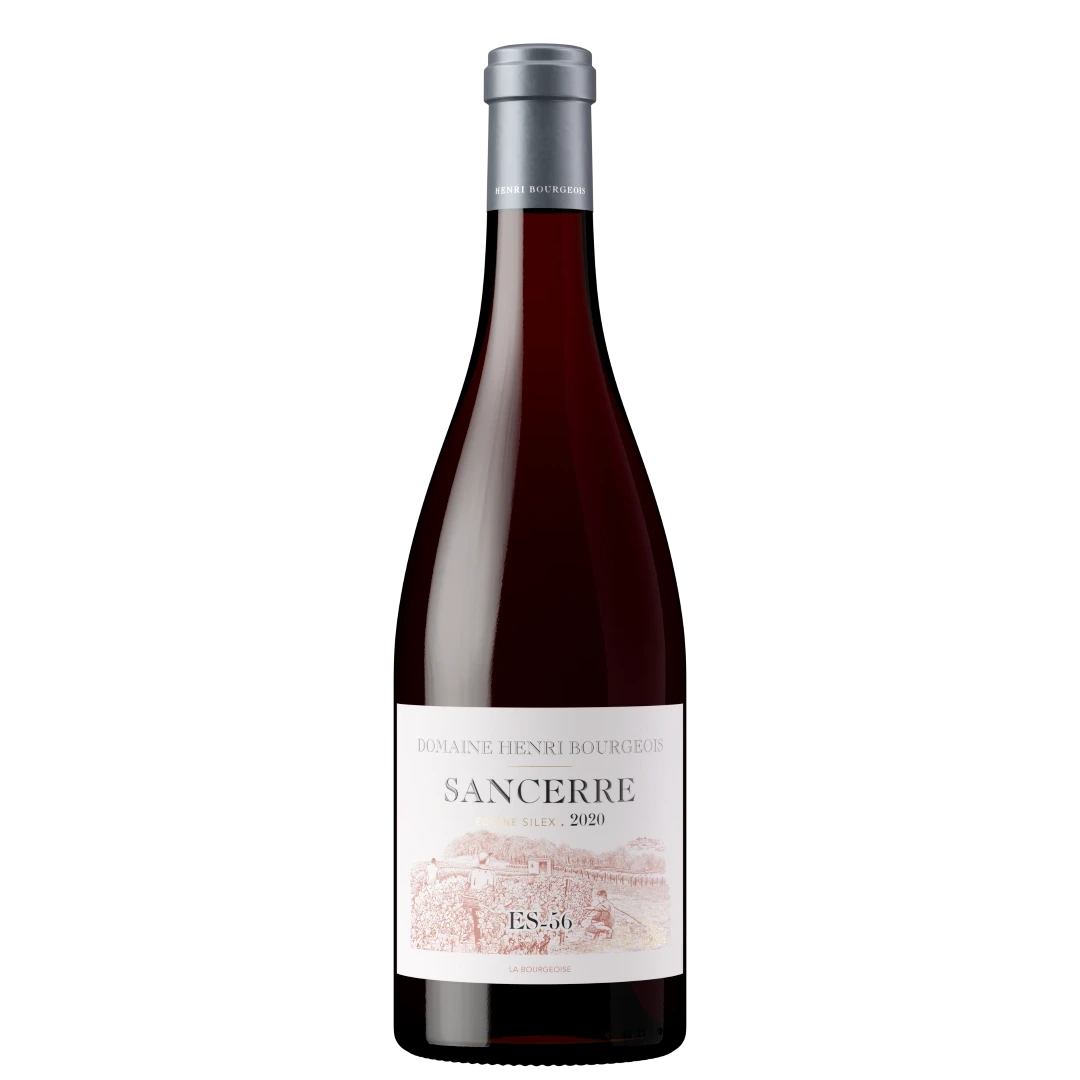
On flint: the "ES-56" red cuvée, tense, spicy
This diversity, rare for a single grape variety in such a restricted area, is the hallmark of Sancerre, as true for Pinot Noir as it is for Sauvignon Blanc.
Compared to the great Pinot Noirs of the Côte de Nuits or Côte de Beaune, Sancerre red stands out with more freshness, less oak, and more immediate drinkability. It's not a less ambitious wine: it's a wine that embraces a different philosophy, precision rather than power, tension rather than opulence.
Its freshness makes it a versatile red at the table: roasted poultry, grilled salmon, or even certain soft cheeses pair naturally with its lightness and acidity. It's a red that doesn't try to dominate the dish, but to accompany it — a rather rare quality among red wines, and one that explains why it is increasingly appealing to enthusiasts accustomed to whites.
→ All our advice on food and wine pairings
Between 14 and 16°C, cooler than most reds. For aged cuvées such as "Le Graveron" or "ES-56" after several years, you can slightly increase the temperature to 16-17°C to allow the complexity to express itself.
FAQ
Does Sancerre red wine keep for a long time?
An entry-level red Sancerre can be drunk within 3 to 5 years. Single-vineyard cuvées like "Le Graveron" can be kept for 10 to 15 years, developing aromas of undergrowth and spices.
Why is Pinot Noir so pale?
Pinot Noir has thin, lightly pigmented skin. Combined with a winemaking process that prioritizes finesse over extraction, this results in a pale, almost translucent color, which is nothing like the intensity of a Cabernet Sauvignon.
What's the difference between Sancerre red and Sancerre rosé?
Both are made from 100% Pinot Noir. Our Sancerre rosé — our "Grande Réserve" rosé cuvée — is made by direct pressing of the grapes, without maceration, unlike the red which macerates with the skins to extract color and tannins.
Should Sancerre Pinot Noir be decanted?
Rarely necessary for young, fruity vintages. For "Le Graveron" and other vintages designed for aging, after several years, a 30-minute decanting can help reveal the full aromatic complexity developed in the bottle.

A Bourgeois Family Recipe: Salmon en Bellevue

Which dry white wine is best for an aperitif? Our tips and selection

The 3 Terroirs of Sancerre: Flint, Caillottes, and White Soil