
Choosing your wine
Sauvignon Blanc: Taste, Aromas, and Style


Sauvignon Blanc: Taste, Aromas, and Style
Sauvignon Blanc is our grape. Not just because it's the one we've been growing in Chavignol for generations—but because it's one of the most honest grape varieties there is: it tells its story, it translates its soil with an undeniable precision.
This guide is built upon what we observe in our vineyards and in our glasses. Not a list of theoretical aromas: a concrete interpretation of how this grape expresses itself according to terroirs, vintages, and winemaking styles.
Regardless of its origin, Sauvignon Blanc shares a recognizable flavor DNA:
It is this combination that makes Sauvignon Blanc particularly suited to gastronomy: it cleanses the palate, highlights the flavors of the dish without masking them, and remains enjoyable glass after glass


This is the most immediate register, the one that expresses itself from the first nose:
This register is often misunderstood – and sometimes disliked. But on a great Sancerre, herbal notes are a signature, not a flaw:
This is where Sancerre stands out from the rest of the world. The minerality of Sancerre Sauvignon Blanc is not an added aroma—it's the direct translation of the soil:
Minerality is one of the most debated concepts in oenology. It does not correspond to a chemically identifiable aroma, but to a complex sensation – tension, salinity, length – that wines from certain terroroirs consistently produce.
This is what we observe most clearly in our comparative tastings at the estate: the same grape variety, the same hand, the same methods—and radically different wines depending on the plot.
On limestone soils: lemony freshness, tension, lightness. The wine is as precise as a blade.

On Kimmeridgian marl: more body, length, a certain roundness. The wine envelops rather than cuts through.

On flint: electric energy, smoky minerality, intense length. The wine has character, personality.

This variation is what makes Sancerre Sauvignon Blanc unique in the world—and what has justified our single-vineyard approach for generations.
The benchmark style for serious enthusiasts. Vibrant acidity, mineral tension, clear aromatic expression. The most interesting age-worthy wines of the varietal are found here.
Our Clos Henri embodies this style: tropical intensity, exuberant passion fruit and lychee aromas, freshness maintained by the climate. An expressive, immediately captivating Sauvignon Blanc.
Often oak-aged and blended with Sémillon. Very different style — fuller, more oaky, less aromatically expressive but with great complexity in the long term.
California (Fumé Blanc), South Africa (Constantia, Elgin), Chile, Austria — each region produces a different version, but the signature freshness and acidity remain recognizable.
Between 10 and 12°C for Loire wines. A Sancerre white that is too cold will close off and lose its aromas — too warm, it will lose its freshness and tension. Remove the bottle from the refrigerator 20 to 30 minutes before serving.
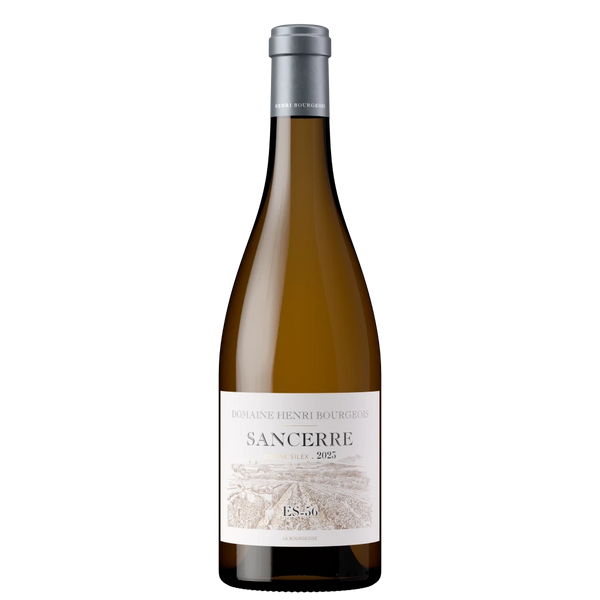
For grand cru vintages ("ES-56", "La Côte des Monts Damnés" from a 7-10 year old vintage), you can slightly increase to 13°C to allow the complexity to express itself.
FAQ
Is Sauvignon Blanc always dry?
Almost always. Sauvignon Blanc rarely develops high levels of natural sugar at ripeness, making it naturally a dry wine. In Sancerre, the wines are consistently dry. There are a few rare exceptions in Germany or Alsace, but these are marginal.
Does Sauvignon Blanc age well?
It depends on the style. An entry-level Sancerre should be drunk within 2-3 years. Our great single-vineyard cuvées ("ES-56", "Jadis", "La Côte des Monts Damnés") can be kept for 10 to 15 years and gain considerably in complexity with time.
What is the difference between Sauvignon Blanc and Sauvignon Gris?
Sauvignon Gris is a natural mutation of Sauvignon Blanc, with a slightly pinkish skin. It is rarer, producing wines that are generally riper and less herbaceous. It is found mainly in Chile and in a few estates in the Loire Valley.

A Bourgeois Family Recipe: Salmon en Bellevue

Which dry white wine is best for an aperitif? Our tips and selection

The 3 Terroirs of Sancerre: Flint, Caillottes, and White Soil