
Choosing your wine
Pinot Noir vs Cabernet Sauvignon: What's the Difference?


Pinot Noir vs Cabernet Sauvignon: What's the Difference?
These are the two great French red grape varieties — and they have almost nothing in common. Pinot Noir is fine, delicate, transparent about its terroir. Cabernet Sauvignon is powerful, structured, built to last. Two philosophies of red wine, two opposite ways of defining elegance.
We have grown Pinot Noir in Sancerre for generations — it is the only red grape variety allowed in the appellation. This comparison is built on that hands-on experience, with an honest look at both varieties.
Pinot Noir is the historic red grape of Burgundy — Gevrey-Chambertin, Chambolle-Musigny, Vosne-Romanée. It is a delicate, temperamental grape, difficult to grow, that produces wines with very fine aromas and a remarkable ability to reflect the terroir it grows on.
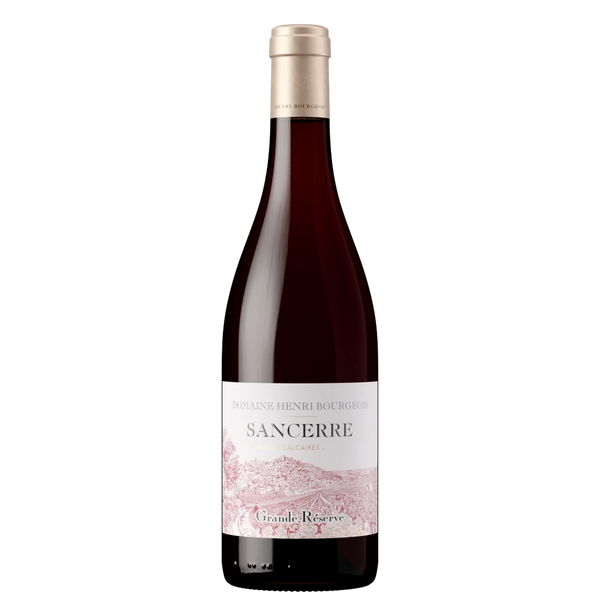
In Sancerre, it expresses itself differently than in Burgundy — the flint and limestone-clay soils give it a tension and freshness that the soils of the Côte d'Or don't have. This is what makes red Sancerre so distinctive: a Loire Pinot Noir, not a Burgundian one.
Cabernet Sauvignon is the backbone of great Bordeaux — Pauillac, Saint-Estèphe, the Médoc. It is a robust grape, little troubled by disease, productive, giving tannic, structured wines with a great capacity to age. It is rarely vinified alone in Bordeaux, where it is classically blended with Merlot and Cabernet Franc.
Its presence worldwide — Napa Valley, Chile, Australia, South Africa — makes it the most widely planted red grape variety on earth. That universality owes as much to its agronomic robustness as to its very recognisable style.
| Criterion | Pinot Noir | Cabernet Sauvignon |
|---|---|---|
| Tannins | Fine, silky, understated | Powerful, tight, structuring |
| Acidity | High — pronounced freshness | Moderate to high |
| Body | Light to medium | Medium to full |
| Primary aromas | Cherry, strawberry, raspberry, rose | Blackcurrant, blackberry, bell pepper, cedar |
| Aromas with age | Mushroom, forest floor, leather, truffle | Cigar box, tobacco, leather, cedar |
| Oak | Discreet — subtle ageing | Often pronounced — new barrels common |
| Ageing | 10–20 years for great cuvées | 15–30 years for great Bordeaux |
| Serving temperature | 14–16°C — cooler than other reds | 16–18°C |
| Signature regions | Burgundy, Sancerre, Oregon, New Zealand | Bordeaux, Napa Valley, Chile, Australia |
Pinot Noir is one of the most aromatically complex grape varieties in the world — but its aromas are delicate, never loud.
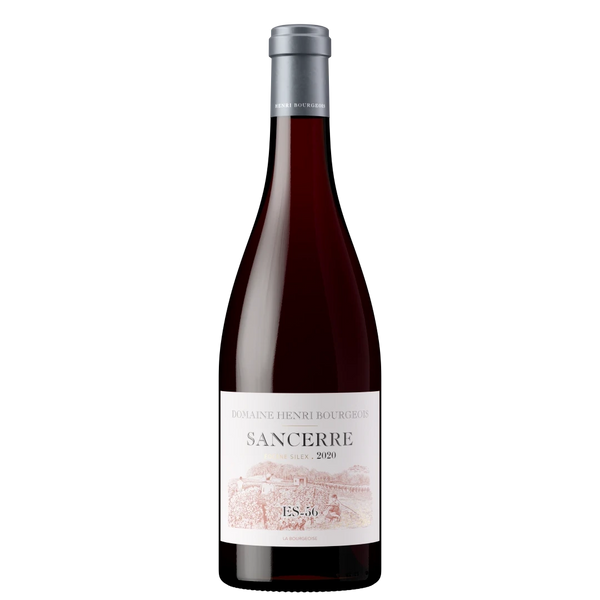
Young: fresh cherry, raspberry, wild strawberry, violet, rose. On flint terroirs like our "ES-56", a touch of smoky stone is added.
With age: button mushroom, forest floor, leather, truffle, supple leather. It is in this evolved register that great Burgundies and our parcel-specific Sancerre cuvées show their true dimension.
Cabernet Sauvignon is more immediately expressive and easier to identify in a blind tasting:
Young: blackcurrant, blackberry, blueberry, sometimes green bell pepper (a characteristic marker of the variety), cedar.
With age: cigar, tobacco, leather, graphite, truffle. Great 20-year-old Bordeaux live in this register — deep, complex, with a finish that can last several minutes.
Its finesse and supple tannins make it the most versatile red at the table. It complements without overpowering:


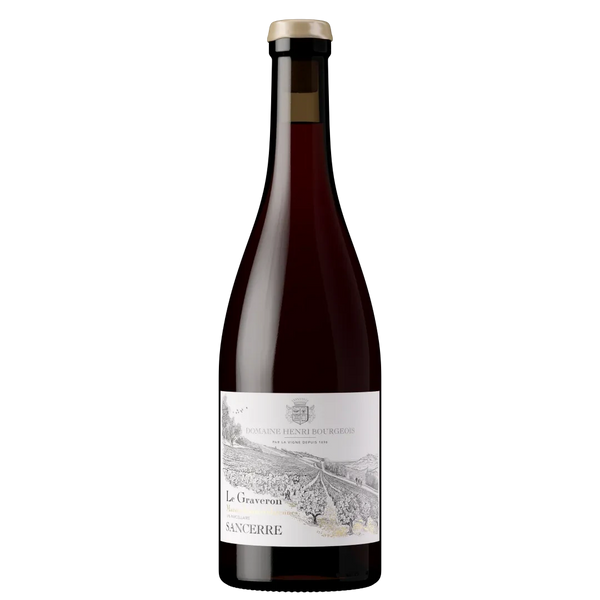
Our red Sancerre "Le Graveron", grown on Kimmeridgian marl, is the ideal match for roast guinea fowl with mushrooms or a rosemary-grilled côte de bœuf. Its lacy tannic structure and its notes of dark fruit and chocolate make it the most "Burgundian" of our reds.
FAQ
Is Pinot Noir always lighter than Cabernet Sauvignon?
Generally, yes — Pinot Noir has fewer tannins and a lighter body. But a great Burgundy Pinot Noir, or our "Le Graveron" from Sancerre, can have a depth and complexity that some Cabernets never reach. Pinot's lightness is a matter of structure, not quality.
Can Pinot Noir be served cool?
Yes, and it's actually recommended. Contrary to popular belief about red wine, Pinot Noir is best served between 14 and 16°C — meaning take the bottle out of the cellar 30 minutes beforehand, not leave it at room temperature. Too warm, and the aromas blur while the alcohol takes over.
What exactly is red Sancerre?
Red Sancerre is made exclusively from Pinot Noir, within the Sancerre appellation. It is often more taut and mineral than a Burgundy — the flint and limestone-clay soils give it a freshness the Côte d'Or doesn't have. It is a Loire Pinot Noir, with an identity all its own.

A Bourgeois Family Recipe: Salmon en Bellevue

